What Data Does Uber Collect After a Crash, and Can It Help Your Case? Understanding Uber Crash Data

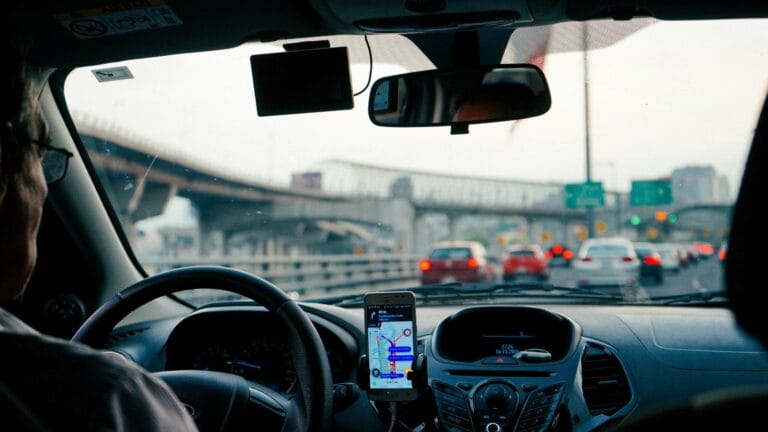
You’re riding in an Uber or Lyft when a crash happens. In the chaos that follows (checking for injuries, exchanging information, waiting for police), it’s easy to forget that the app on your phone may have recorded everything leading up to that moment. GPS coordinates. Speed data. Trip timestamps. Driver behavior metrics. All of it quietly logged in the background. This collection of information, known as uber crash data, can play a crucial role in understanding the events surrounding the incident.
For injured riders, other drivers, pedestrians, and cyclists, that data can be the difference between a strong personal injury claim and an uphill battle. But accessing it, and using it effectively, requires acting fast and knowing what to ask for.
Here’s what rideshare companies actually collect, why it matters in a crash case, and what a Baltimore personal injury attorney can do to preserve and leverage that evidence on your behalf.
Understanding the importance of the uber crash data can significantly impact the outcome of a case.
Understanding the Uber Crash Data Trail
Modern rideshare apps are, at their core, sophisticated data collection platforms. Every trip generates a detailed digital record. When a collision occurs, that record becomes a potential goldmine of evidence.
GPS and Location Data
Both Uber and Lyft use continuous GPS tracking throughout a trip. This data logs the vehicle’s precise route, turn by turn. In a post-crash investigation, GPS logs can reveal:
- Whether the driver deviated from the suggested route,
- The exact location where the collision occurred,
- How long the vehicle was stationary before or after impact, and
- Whether the driver made suspicious stops or detours.
GPS accuracy in modern smartphones is typically within a few meters. That level of precision can corroborate or contradict a driver’s account of events in ways that eyewitness testimony simply cannot.
Speed and Acceleration Data
Rideshare apps track speed in real time, partly for rider safety features and partly to calculate accurate ETAs. This data can show whether a driver was speeding at the time of a crash, which is a critical fact in any negligence claim.
Beyond raw speed, telematics systems can also capture rapid acceleration and harsh braking events. If a driver was driving aggressively in the minutes before a crash, that pattern of behavior may be documented in the trip data.
Trip Timestamps and Status Logs
Every phase of a rideshare trip is time-stamped: when the driver accepted the request, when they arrived, when the trip started, and when it ended. These timestamps matter because they establish the driver’s “on-duty” status at the time of the crash, which directly affects which insurance policy applies.
Uber and Lyft both use a three-period insurance framework:
- Period 1: App is on, but no ride accepted. Limited liability coverage applies.
- Period 2: Driver has accepted a ride and is en route to pick up the passenger. Uber and Lyft’s $1 million liability policy is active.
- Period 3: Passenger is in the vehicle. The $1 million policy remains in effect.
Trip log data is often the clearest way to prove which period was active at the moment of impact and therefore which insurer is on the hook.
Driver Behavior and Safety Scores
Uber and Lyft both use in-app telematics to monitor driver behavior. Uber’s Real-Time ID Check and Safety Toolkit, for example, flag sudden swerves, hard braking, and rapid acceleration. Lyft has similar systems in place.
These safety scores and internal driver behavior records may not be readily handed over, but they are discoverable through litigation. A driver with a documented history of aggressive driving or prior incidents is not an incidental detail. It goes directly to the question of the company’s negligence in retaining that driver.
In-App Communications
Any messages exchanged through the app, including notifications sent to the driver mid-trip (such as new ride requests), can be relevant. If a driver was distracted by an incoming ping or a support notification at the time of the crash, that communication log is evidence of distraction.
What About the Driver’s Phone?
Beyond the rideshare app itself, the driver’s personal smartphone can contain additional evidence:
- Call and text logs showing whether the driver was on the phone at the time of impact,
- App usage data revealing if the driver was switching between apps while driving,
- Third-party dashcam footage if the driver used a connected device, and
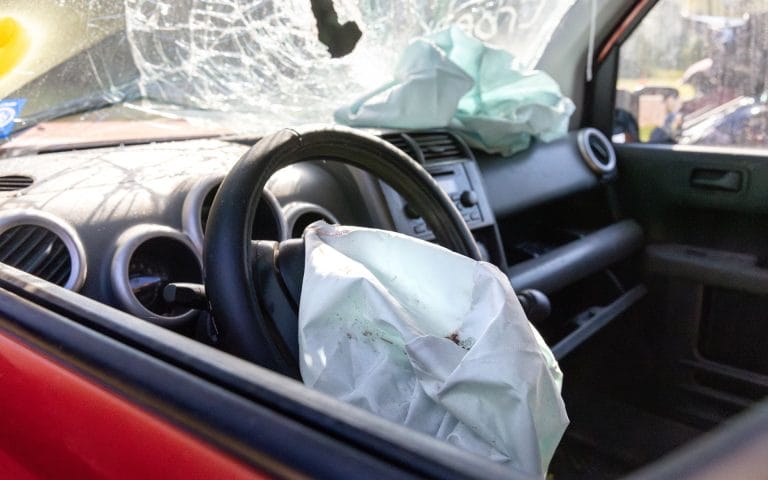
- Downloaded data from the vehicle’s Event Data Recorder (EDR), sometimes called the “black box,” which logs speed, braking, and airbag deployment in the seconds before a crash.
EDR data requires physical access to the vehicle and specialized equipment to extract, but it is among the most objective forms of crash reconstruction evidence available.
Why Digital Evidence Disappears and What to Do About It
Here’s the problem: Rideshare companies don’t keep this data forever, and they have no legal obligation to preserve it unless they are formally put on notice.
Uber and Lyft’s standard data retention policies typically hold trip records for a limited period, often 30 days for granular data like GPS logs and telematics. Once that window closes, the data may be gone permanently.
This is why the single most important step you can take after a rideshare crash is to contact a personal injury attorney as soon as possible.
An experienced attorney can issue a litigation hold letter (also called a spoliation letter) to Uber, Lyft, the driver, and their respective insurers, to formally demand that all relevant data be preserved. This letter creates a legal obligation to retain the evidence. If a company or driver destroys data after receiving a spoliation notice, that destruction can itself be used against them in court—a legal concept called spoliation of evidence.
Without that letter, valuable evidence may be routinely overwritten before you even know you need it.
How Uber Crash Data Supports Your Personal Injury Case
Once preserved and obtained through the discovery process, rideshare data can support your case in several concrete ways.
- Proving negligence
Speed data, harsh braking records, and GPS deviation logs can show that the driver operated the vehicle recklessly. Combined with accident reconstruction analysis, digital evidence often tells a more persuasive story than a driver’s self-serving account.
- Establishing the insurance period
As noted above, the applicable insurance policy and the coverage limits depends entirely on which operational period was active. Trip timestamp data resolves this question with precision.
- Contradicting the driver’s statement
Drivers sometimes claim they were stopped, traveling at low speed, or not at fault. GPS and telematics data frequently contradict those accounts. Digital evidence doesn’t have a memory problem or a motive to lie.
- Showing corporate negligence
If Uber or Lyft retained a driver with a documented record of dangerous behavior, their internal safety records become evidence of the company’s own negligence. This can open the door to claims against the platform itself—not just the individual driver.
- Corroborating your injuries
The force of impact recorded in EDR data can be linked to the type and severity of injuries you sustained and lend credibility to your medical records and damages claims.
What Uber and Lyft Are Required to Disclose
Rideshare companies are private businesses, and they don’t voluntarily hand over trip data to accident victims. However, once litigation begins, they are subject to discovery, the formal legal process through which parties exchange evidence.
Through discovery, your attorney can request:
- Full GPS and trip logs for the ride in question,
- Driver telematics and safety score history,
- Prior complaints or incidents involving the same driver,
- Internal communications related to the driver’s account, and
- Insurance documentation confirming coverage at the time of the crash.
Uber and Lyft will often resist broad discovery requests and may claim some records are proprietary or irrelevant. An experienced attorney knows how to draft targeted, legally sound discovery requests and, when necessary, file motions to compel disclosure.
Maryland law also allows victims to access information about the driver’s employment relationship with the platform. This is a critical issue given that rideshare companies typically classify drivers as independent contractors in an attempt to limit their liability exposure.
The Baltimore Angle: Why Local Counsel Matters
Rideshare crashes in Baltimore present specific legal considerations. Maryland’s contributory negligence rule means that if you are found even slightly at fault for a crash, you may be barred from recovering any damages. This makes building a clean, well-documented case of driver negligence especially important, and digital evidence is one of the most reliable ways to do that.
Baltimore is also home to heavy rideshare traffic, particularly around the Inner Harbor, Fells Point, Federal Hill, and the areas around Johns Hopkins and University of Maryland Medical Center. These corridors see high volumes of Uber and Lyft trips, and the data infrastructure behind those trips is the same regardless of location.
A local attorney familiar with Maryland’s courts, insurance landscape, and contributory negligence doctrine is better positioned to deploy rideshare data strategically than an out-of-state or generalist firm.
Frequently Asked Questions
- Can I request my own Uber or Lyft trip data?
Yes. Both platforms have in-app and web-based options to download your personal trip history, including timestamps and route maps. However, the more detailed telematics and driver behavior data is not available to riders through standard account settings. That requires formal legal channels.
- What if the driver’s app was off at the time of the crash?
If a driver had the app turned off and was not on a rideshare trip, the company’s insurance policies do not apply, and you would be dealing with the driver’s personal auto insurance. Trip log data is what establishes or rules out active trip status.
- Does dashcam footage count as rideshare data?
Dashcam footage is separate from app data, but it’s equally important. If the vehicle had a dashcam, your attorney should seek preservation of that footage immediately. Drivers are not required to disclose dashcam footage voluntarily, but it is discoverable in litigation.
- How long do I have to file a claim in Maryland?
Maryland’s statute of limitations for personal injury claims is generally three years from the date of the injury. However, the data preservation window is far shorter: days or weeks, not years. Don’t let the three-year filing window create a false sense of security about acting quickly to preserve evidence.
Injured in a Rideshare Crash in Baltimore? Talk to an Attorney Now
The data exists. The question is whether it gets preserved before it disappears.
At The Law Offices of Nicholas A. Parr, we represent people injured in Uber and Lyft accidents throughout Baltimore and Maryland. We understand how rideshare insurance works, how to compel the preservation and production of digital evidence, and how to build a case that holds negligent drivers, and the platforms behind them, accountable.
If you or a loved one has been injured in a rideshare crash, the most important thing you can do right now is get legal counsel before that evidence window closes.